Puppet Land

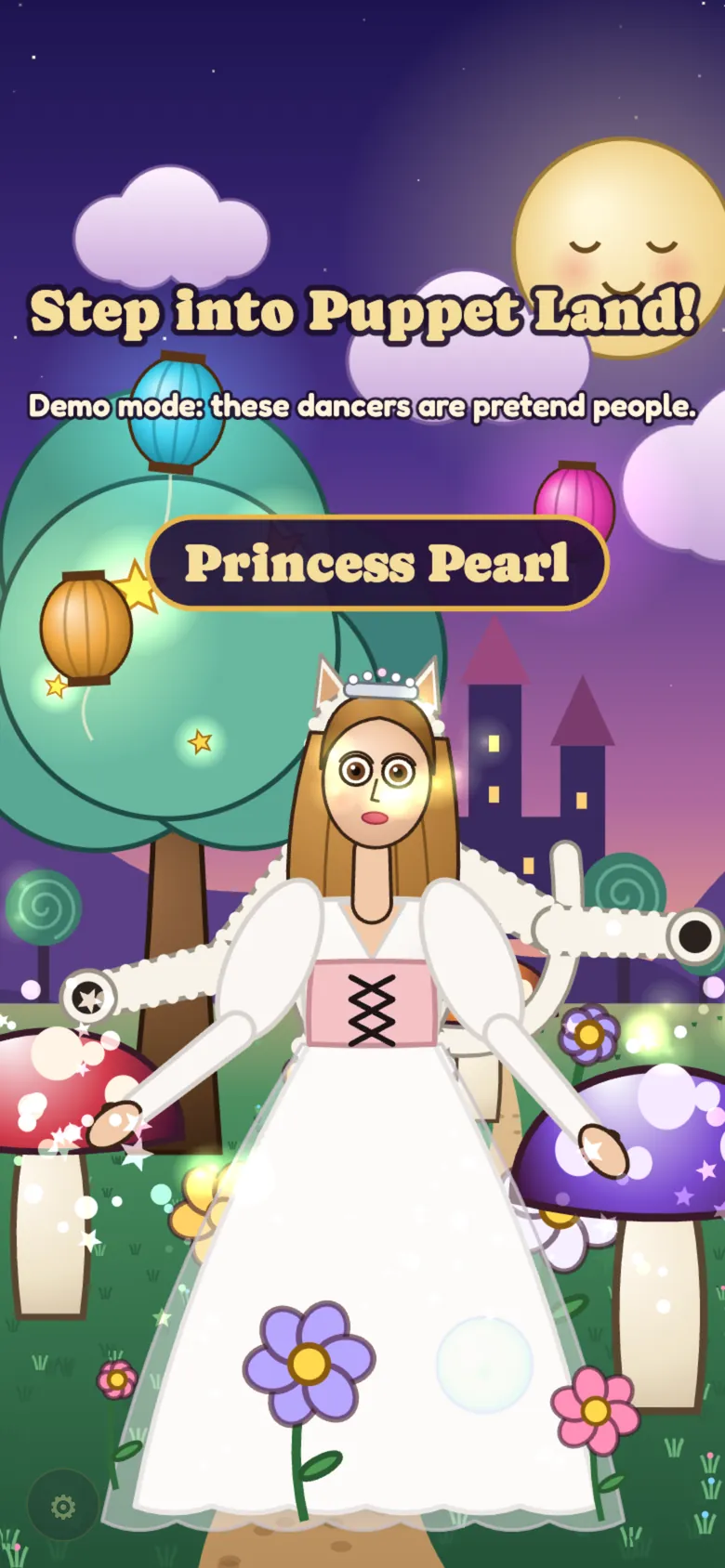
A webcam prototype that turns kids in front of a screen into puppets in a fantasy land, inspired by a children's museum exhibit.

Puppet Land, webcam puppet game built by Miles Media
Built for
Children's museums and play spaces
Type
Webcam puppet game
Status
Preview
Built
Oct 2026

Interactive exhibits like the puppet wall at a children's museum are custom installations, which puts them out of reach for most venues. A webcam and a web browser are everywhere, so the question was how close they could get.

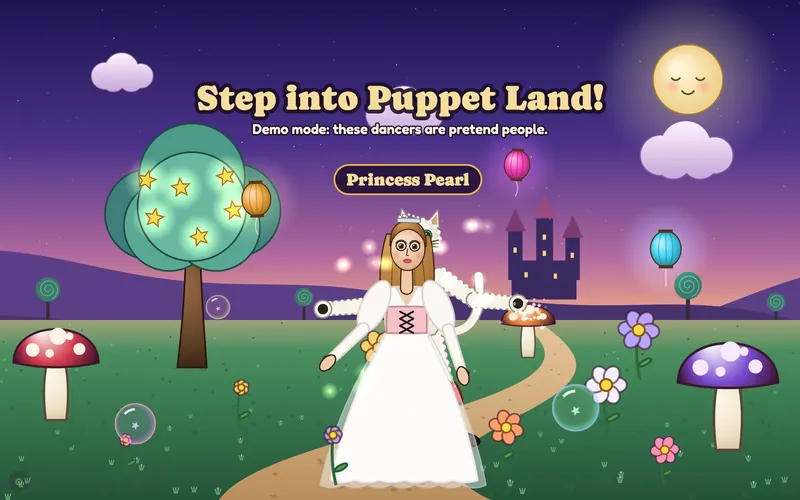
We built a working prototype that finds up to three kids on camera and gives each one a puppet that moves with their body.

  • Kids become puppets

    The camera follows arms, legs and heads, and each child gets their own character from a cast of ten.

  • Raise a hand to change

    Step close and raise a hand to switch puppets, and nobody ends up with the same one.

  • A world to play with

    Bop mushrooms, open flowers, shake fruit from a tree and pop bubbles.

  • Runs on a laptop

    A corner view guides kids to the right spot, and a demo mode runs with no camera at all.

Built and put online as a prototype on October 22, 2026. The next steps toward a real installation are a depth camera and a kiosk setup.

Could a custom game like this help your business?

Museums, libraries, retail displays and event booths can try an interactive camera experience without specialty hardware for the first version.

See how branded game development works, from the first call to launch.
For the technical reader

Technical Stuff

How Puppet Land is built, what it runs on, and the hard problems we solved along the way.

How it's built

Everything runs in the browser as a static site on Cloudflare Pages, with no server code. Google's MediaPipe Pose Landmarker finds up to several people per frame and returns 33 body points for each, using the GPU when it can and the CPU otherwise. A tracker matches people between frames so each kid keeps their puppet, drops duplicate detections and smooths every point to cut jitter. A rig module turns those points into puppet joints (head, shoulders, elbows, wrists, hips, knees, ankles) in screen space and then places the figure in the world. A spring simulation on each bone makes hands and feet swing a little loose. Each puppet is a module that draws itself on a Canvas 2D element from the joint positions, and the props test circles around hands, head and feet to see what they touch. The same pipeline can be fed synthetic bodies, which drives the demo mode and repeatable tests.

Built with

  • JavaScript (ES modules)
  • Canvas 2D
  • MediaPipe Pose Landmarker
  • Web Audio
  • Cloudflare Pages

The hard parts

  1. An arm held up kept firing

    Holding an arm up changed puppets over and over. A hand above the top of the camera frame comes back with very low confidence, and the gesture read low confidence as the arm being down, so it re-armed and fired again. Down is now judged by wrist position only, and in simulation one 3.5 second raise went from 5 changes to 1.

  2. Distance without a depth camera

    We use how big someone looks, shoulder width as a fraction of the frame height, as a stand-in for how close they are. Body size also takes torso length into account, so turning sideways does not shrink it. A person has to stand in the change zone for half a second before a raise counts, which stops people who are just walking past.

  3. Legs the camera cannot see

    A kid standing close has no legs in the frame. Every joint blends between a natural hanging pose and the tracked point according to how visible the point is, so a close-up kid still has puppet legs. A person who leaves the frame fades toward limp, and their puppet stays on stage for 1.2 seconds in case they come back.

  4. Puppets that shrank when you stepped back

    A puppet dropped to about a quarter of the screen height when its person walked back, which made it hard to see. Size now barely changes with distance, from 47% of the screen height far back to 51% up close. Bigger puppets could stand under the camera guide, so when the guide shows the right-most spot stops short of it.

Start a project

Have a problem software could fix?

Tell us what is slowing your business down. If a custom app is the right fix, you get a fixed price before any work starts.